
Music: The first language of childhood
By Priyanka Lugani
Long before children speak their first words, they are listening.
They recognise the rhythm of a heartbeat, the melody of a familiar voice, the gentle hush of the wind through the trees and the steady rhythm of falling rain.
Long before language begins, there is sound.
Why children are naturally drawn to music
Music is often thought of as something we learn. In truth, it is something we discover.
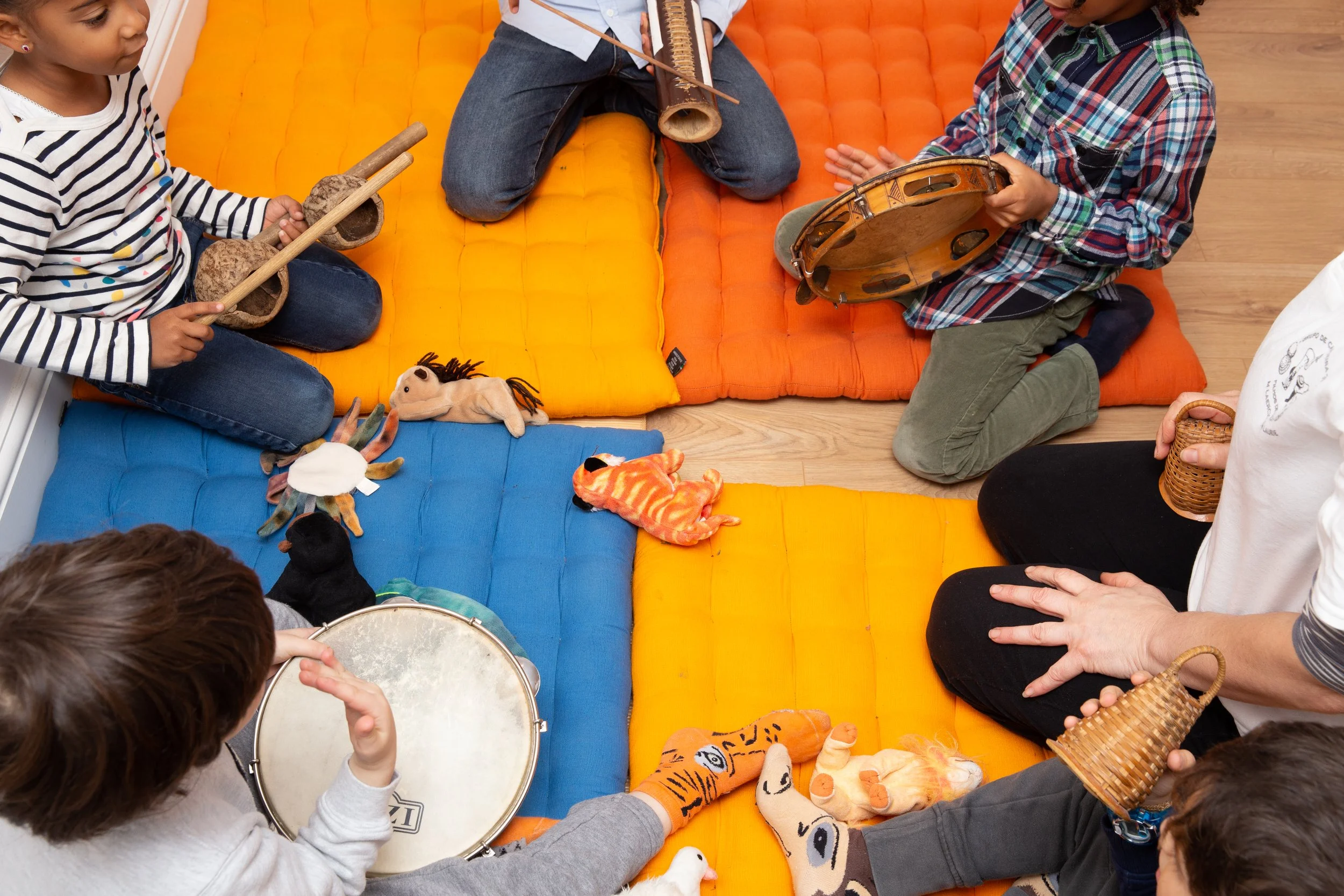
Watch a child with a wooden spoon and an empty bowl. Before long, a rhythm emerges. Listen to a toddler humming to themselves while they play. Notice the delight of little hands shaking bells, tapping drums or exploring the different sounds hidden inside everyday objects.
Children don’t need to be taught to love music.
They are naturally drawn to it.
How music supports early childhood development
Music invites children to listen closely. To notice that every sound is different. That a drum feels deep and grounding, while a bell dances lightly through the air. That some sounds are soft enough to soothe, while others spark movement and laughter.
As they experiment, children begin to discover more than music. They discover cause and effect. Pattern and rhythm. Confidence and self-expression. They learn to listen as much as they learn to play.
And perhaps most importantly, they learn that not every moment needs words.
Some feelings are hummed.
Some are clapped.
Some are sung at the top of little lungs.
Others are found in the small pause between two notes.
Bringing music into everyday family life
Whether it’s singing together while preparing dinner, dancing barefoot in the living room, listening to birdsong on a morning walk or exploring the sounds of simple wooden instruments, music reminds us that beauty is something we experience with our whole selves.
Every rhythm tells a story.
Every melody becomes a memory.
And every child deserves the chance to discover the joy of making a little music of their own.
Questions you may have
-
Music supports listening, rhythm, movement, memory, emotional expression, and early learning. It gives children a natural way to explore sound, pattern, creativity, and connection.
-
Yes. Through music, children begin to notice patterns, cause and effect, rhythm, repetition, and sound differences. These experiences can support attention, coordination, confidence, and self-expression.
-
No. Children can benefit from simple musical moments at home, such as singing together, dancing, listening to nature sounds, clapping rhythms, or exploring everyday objects as instruments.
-
Families can sing while cooking, play soft music during quiet time, dance together, listen to birdsong outdoors, or offer simple instruments like bells, shakers, drums, or wooden objects.
