
Wonder begins with paying attention
By Priyanka Lugani
Children have a remarkable way of reminding us to slow down.
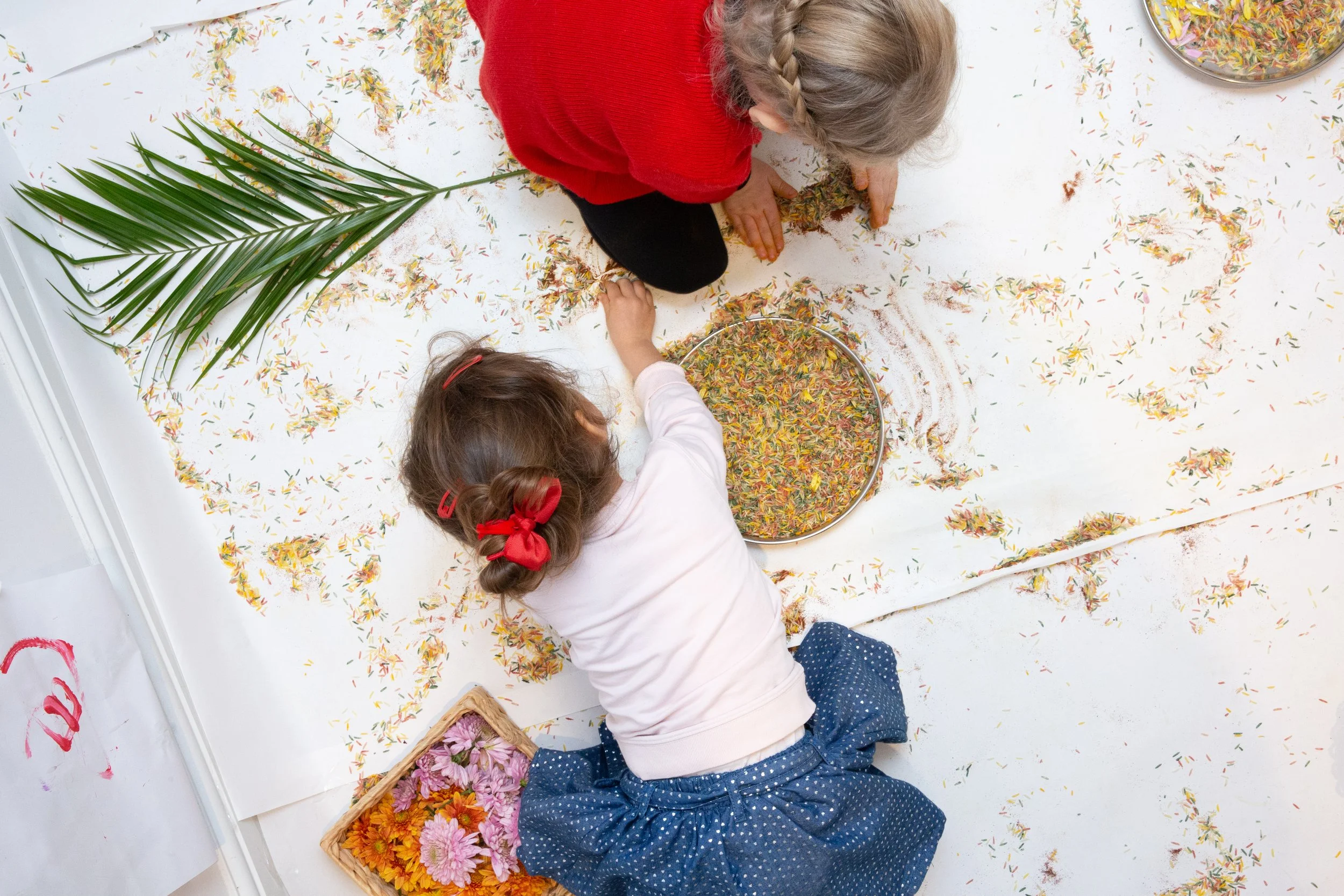
They stop for the tiny ladybird making its way across a leaf. They crouch to watch an ant carrying a crumb many times its size. They collect feathers, pockets full of pebbles and flowers that have already fallen to the ground. They notice what we often walk straight past.
What if we slowed down with them and joined their journey?
A simple nature walk with children
Can you feel the morning breeze on your face? Can you hear the birds before you see them?
Look closely. Can you spot the first wildflower? A butterfly? A snail? A spider’s web shimmering in the morning light?
Run your hand along the bark of a tree. Is it rough or smooth? Crush a sprig of rosemary between your fingers. What does it smell like? Pick a ripe tomato from the vine. Can you taste the warmth of the afternoon sun?
Watch the clouds drift overhead. Which one looks like a rabbit? Which one resembles a sailing boat? Before bedtime, look up once more. Has the sky changed colour? Can you spot the moon?
Tomorrow, notice what has changed. Perhaps another flower has opened. The figs have ripened. The leaves have begun to turn. The air feels a little cooler. The birds sound different.
Raising curious children
The world is always changing, quietly. All it asks of us is to pay attention. Perhaps raising curious children isn’t about having all the answers. Perhaps it’s simply about asking, “Did you notice?”
Because wonder begins exactly where you are.
Questions you may have
-
Nature observation helps children slow down, pay attention, and notice small details in the world around them. It can support curiosity, sensory awareness, imagination, and a deeper connection with nature.
-
Simple nature activities can include listening to birds, watching clouds, collecting leaves, smelling herbs, observing insects, touching tree bark, or noticing how the sky changes throughout the day.
-
Nature gives children endless opportunities to ask questions, explore patterns, and notice change. A walk outside can become a moment of discovery when children are invited to look closely and wonder.
-
No. Some of the most meaningful nature learning happens through simple, unstructured moments: walking, listening, touching, smelling, observing, and asking, “What do you notice?”
